
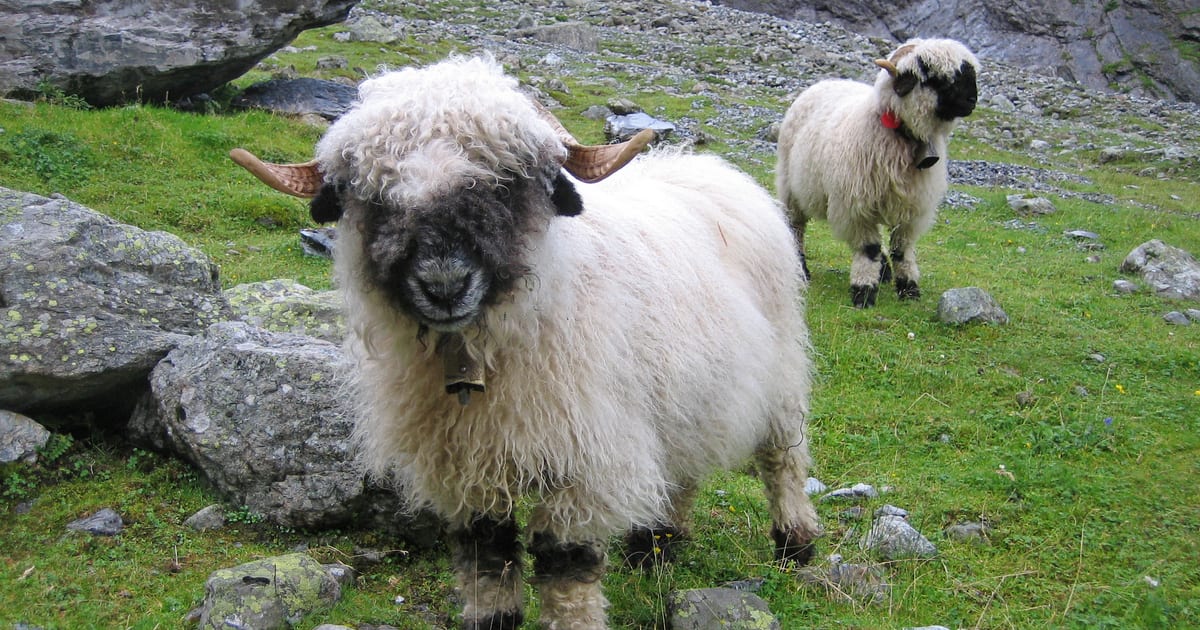

Valais Blacknose sheep are a heritage breed from the Valais canton of Switzerland, bred to thrive on steep alpine pasture. They are large, docile sheep with a thick creamy-white fleece, black markings on the nose, ears, knees, hocks, and feet, and spiral horns in both rams and ewes. They are the breed Lisa Hogan brought to Diddly Squat Farm on Clarkson’s Farm.
Since Valais Blacknose sheep appeared at Diddly Squat Farm on Clarkson’s Farm, one fluffy, black-faced breed has been quietly stealing scenes from Jeremy Clarkson, Kaleb, and even the show’s photogenic countryside. If you have searched "what breed of sheep did Lisa buy on Clarkson’s Farm," you are in good company. Interest in the breed has climbed with every episode.
This guide goes past the "world’s cutest sheep" headlines. Whether you are a viewer smitten by their teddy-bear faces, a homesteader weighing a purchase, or an established shepherd considering the breed, here is what you actually need to know, including the breeding, health, and cost realities most fan pieces skip.
What Breed of Sheep Did Lisa Buy on Clarkson’s Farm?
The sheep drawing all the attention are Valais Blacknose sheep (German: Walliser Schwarznasenschaf), a heritage breed from the Swiss Alps. Lisa Hogan introduced them to Diddly Squat, sourcing lambs from a specialist UK breeder, according to Farmers Guardian.
The show was refreshingly candid about it: the Valais Blacknose were not chosen because they out-produce a commercial hill breed. They do not. They earned their spot on charm and media appeal, which, fittingly, is much the same reason the breed has taken off worldwide.
Clarkson’s Farm also featured a very different sheep type on Jeremy’s side of the operation. As the same Farmers Guardian report puts it, the show set up a deliberate contrast: EasyCare for Jeremy and Valais Blacknose for Lisa. EasyCare are a low-input commercial breed; Valais Blacknose are attention-grabbing, high-value, and documentation-heavy. That contrast is a useful reminder that sheep operations sit on a wide spectrum, and BreederHQ supports sheep breeding records across both ends of it, from rare breed-up programs and fiber flocks to meat, commercial, heritage, and low-input sheep operations.
What Are Valais Blacknose Sheep?
Origin and history. The Valais Blacknose comes from the Valais canton and Bernese Oberland of Switzerland, bred to thrive on steep, rugged alpine pasture. The breed is documented as far back as the 15th century, though the modern German name dates to 1884 and the official breed standard was not set until 1962. In Switzerland it is still a working dual-purpose breed, raised for both meat and wool. These history and use details are summarized by the Valais Blacknose Sheep Society and in breed references such as Wikipedia’s Valais Blacknose entry.
Breed characteristics. They are unmistakable: a thick, creamy-white fleece over the whole body, offset by black markings on the nose, eyes, ears, knees, hocks, and feet, the signature "black boots." Both rams and ewes carry spiral horns. They are also large animals: rams weigh about 80-130 kg (175-285 lb) and ewes about 70-90 kg (155-200 lb), which matters for fencing and handling.
Why Are They So Popular?
Dubbed "the world’s cutest sheep" across social media, the breed already had momentum before television. Clarkson’s Farm simply put it in front of a mainstream audience. The appeal combines a striking, photogenic look, a gentle and people-oriented temperament, genuine rarity outside Europe, and now broad exposure. For many new owners, they function as much as fiber animals and characterful livestock pets as production sheep.
Valais Blacknose Temperament and Personality
Temperament is where the breed earns its devoted following. Valais Blacknose are docile, curious, and unusually people-friendly, frequently called dog-like. They tame readily, handle calmly, and suit hands-on smallholders and families. That sociability makes them excellent show and fiber animals, though it also means they bond strongly and should not be kept alone.
How Much Do Valais Blacknose Sheep Cost?
Price depends heavily on pedigree percentage, sex, conformation, and registration, and the market has cooled somewhat from its early-hype peaks. As of mid-2026, advertised US prices commonly range as follows:
- Percentage lambs (F1-F3): ~$1,000-$3,000
- Higher-percentage / purebred stock: ~$3,000-$8,000
- Fullblood lambs and elite genetics: $5,000 to $25,000+
Bred ewes commonly run $2,500-$8,000. Treat any figure as a moving target: prices vary by region, registry, and how close the animal sits to fullblood status, and live listings such as Openherd’s US Valais Blacknose listings are the best gauge of the current market.
Can Valais Blacknose Sheep Be Profitable?
This is best understood as a specialty breeding and marketing model, not a commodity livestock model. Valais Blacknose economics look almost nothing like commercial sheep farming. A commercial flock earns its keep through volume, with meat, wool, and market lambs priced in tens or low hundreds of dollars. Valais Blacknose sit at the opposite end. They are a low-volume, high-value breed whose income, where it exists, comes mainly from breeding stock rather than commodity output.
The revenue streams breeders actually use include:
- Breeding stock sales. The core of most programs. Registered ewes and rams, especially higher-percentage and fullblood animals, command premiums while the breed remains scarce in North America.
- Breed-up programs. Selling F1 through F4 animals to other breeders working toward purebred and fullblood status creates demand at every percentage tier.
- Registered and premium genetics. Proven rams, flush-quality ewes, and animals with strong conformation and documented lineage sell well above pet-quality stock.
- Embryo transfer and AI. Established programs can offer semen, embryos, and flushing services, multiplying the reach of a single elite animal.
- Agritourism and educational events. Farm visits, shearing days, workshops, and school or community events turn the breed’s photogenic appeal into direct and ancillary income.
- Farm marketing and social-media visibility. The same charm that drove the Clarkson’s Farm surge can build an audience that supports stock sales, fiber products, and event attendance.
None of this is a guarantee, and it would be dishonest to present it as one. Profitability depends on genetics, management, animal health, operating costs (feed, veterinary care, shearing, fencing, transport, and registration), and prevailing market demand, which has already softened from its peak. High purchase prices also mean significant capital at risk. Successful programs are typically built over years rather than seasons: reputation, proven bloodlines, and a track record of healthy, well-documented animals compound slowly.
That last point matters more than it first appears. When a buyer pays a premium for a Valais Blacknose, much of what they are paying for is documentation: a verifiable pedigree, a clean health record, and a breeding history that proves the animal is what the listing claims. In a developing breed, the records attached to an animal are not paperwork around the asset. They are part of the asset.
Valais Blacknose Sheep for Sale: Are They Available in the United States?
Yes, though the supply story is unusual. Strict livestock import rules meant the breed could not be brought to the US directly from the UK or Europe. American breeders instead launched a breed-up program using imported semen, and later imported embryos. The Valais Iowa breed-up overview notes that US regulations originally allowed frozen semen rather than live animals or frozen embryos, and that frozen embryo imports from New Zealand later accelerated the availability of purebred animals. Other breeder histories, such as Virginia Valais Blacknose, describe semen becoming available in North America in late 2017 or early 2018, embryos arriving in 2020, and the first purebred Valais lambs being born in the US in spring 2021.
As a result, many American animals are graded up over generations: F1 (50%), F2 (75%), F3 (87.5%), F4 (93.75%), and F5 purebred (about 96.875%, commonly rounded to 97%). Several registries operate in North America, including the American Valais Blacknose Sheep Registry (AVBSR) and others, each tracking percentage, purebred, and fullblood categories. The VBSANA breed-up policy describes F1 through F5 progression and classifies F5 animals at 96.88% as purebred.
The hardest part is not the price. It is finding reputable, correctly documented stock. At several thousand dollars per animal, a vague social-media listing is a poor place to make that decision. This is why many buyers increasingly turn to dedicated breeder marketplaces, where evaluation happens against real information rather than a handful of photos.
For buyers, that means access to pedigree information, registration records, and health history before any money changes hands, and far greater confidence when weighing a high-value animal. For breeders, the same transparency works in their favor: a marketplace built around documented records lets them showcase verified lineage, breeding history, and health records, which is what justifies premium pricing and earns the trust that turns a browser into a buyer. BreederHQ’s marketplace (marketplace.breederhq.com) is one example built around this two-sided transparency, surfacing documented percentage, registration, and health information up front while giving breeders a place to market offspring to an audience already searching for the breed.
Valais Blacknose Sheep Breeders in the United States
The US Valais Blacknose breeder landscape is young and still concentrated. Most American breeders run breed-up programs, working percentage animals (F1 through F4) toward purebred and fullblood status, with a smaller number of fullblood animals at the top of the market. Search for Valais Blacknose sheep breeders in the USA and you will find farms spread across many states, often selling out of their lamb crops well in advance, which is part of why doing your homework before you commit matters.
Registry participation is the backbone of credibility in a developing breed. Several North American organizations record Valais Blacknose animals, including the American Valais Blacknose Sheep Registry (AVBSR) and the Valais Blacknose Sheep Association of North America (VBSANA), among others. These bodies track parentage, breed-up percentage, and conformity to the breed standard. No single registry is universal, and naming them here is descriptive, not an endorsement of any registry or breeder. Before you buy, confirm which Valais Blacknose registry an animal is recorded with and that the registry is recognized in the market you intend to sell or show in.
Whether you find a seller through a registry member listing, a Valais Blacknose breeder directory, a breeder marketplace, or a social-media post, the due diligence is the same. For any animal advertised as Valais Blacknose sheep for sale, verify the documented registration and breed-up percentage, the parentage behind it, the health and vaccination history, and the sale and registration-transfer terms in writing. Reputable Valais Blacknose sheep breeders expect these questions and answer them readily; a seller who cannot produce the paperwork is a reason to slow down, not to speed up.
This is where a documentation-first breeder marketplace helps both sides: buyers can review pedigree, registration, and health information up front, and breeders can show verified records rather than ask buyers to take their word for it. However you connect, the goal is the same, an animal whose history you can actually check.
Breeding Valais Blacknose Sheep
Gestation and lambing. Like all sheep, ewes carry for roughly 145-152 days (about five months). Valais Blacknose are non-seasonal breeders and often produce single lambs, though twins occur. The Valais Blacknose Society care guide describes them as non-seasonal breeders and discusses breeding age and lambing expectations.
Breeding considerations. Ewes are usually not bred until over a year old, lambing for the first time around 18-24 months. Because the North American population was built through grading up, breeders also rely heavily on artificial insemination and embryo transfer to access top fullblood genetics, and they think generationally, since each grade-up step materially increases an animal’s value.
The role of registries. In a developing breed, registries do far more than issue certificates. They maintain the pedigree integrity the whole market depends on, recording parentage and tracking breed-up percentages so that an F3 is verifiably an F3 and a fullblood is verifiably a fullblood. They define and uphold the breed standard that keeps animals recognizably Valais Blacknose as the population grows, and they give buyers a neutral reference point rather than a seller’s word. Over the long term, that same record-keeping is how a young population preserves genetic diversity and breed character.
Genetic management. With a small founder population outside Europe, inbreeding is a genuine risk. Sound matings depend on knowing exactly how animals are related, which is why accurate pedigrees and breed-up percentages are worth as much to flock health as they are to sale price. Plan pairings with diversity in mind, and keep the lineage behind every decision documented rather than remembered.
For Prospective Breeders
Could You Actually Start a Valais Blacknose Program?
Watching the show and wondering if you could do this is a different question from wondering what breed the sheep are. This section is for people in the second category.
The short answer: yes, but with a clear-eyed understanding of the timeline. A breed-up program is a multi-year commitment. If you start with F1 foundation animals today, reaching F5 purebred classification takes roughly five to seven years of consistent breeding back to high-percentage genetics, with proper documentation at every step. People are doing it across multiple US states right now, and the market for documented animals at every percentage tier is real.
How a Breed-Up Program Works
Because live Valais Blacknose could not be imported directly to the US, American breeders built the population from the genetics up. Here is the progression, as defined by the VBSANA breed-up policy:
- F1 (50%) Foundation ewe bred to a fullblood or purebred Valais Blacknose ram. The offspring carry half Valais genetics.
- F2 (75%) F1 ewe bred back to a fullblood or purebred ram. Each generation adds roughly half again toward pure.
- F3 (87.5%) The markings and character become more pronounced. Most animals at this tier have visible Valais Blacknose traits.
- F4 (93.75%) High-percentage animals. Buyers at this tier are looking for conformation and registry eligibility for the next generation.
- F5 / Purebred (96.875%) VBSANA classifies F5 animals as purebred. At this point, animals are eligible for the purebred registry category.
- Fullblood Traces entirely to imported Valais Blacknose genetics, typically via embryo transfer from New Zealand imports. These sit at the top of the market.
Each step up adds real market value. F1 lambs sell for $1,000-$3,000; documented F4 and F5 animals routinely command $5,000-$15,000 or more. The economics reward the breeder who documents consistently and breeds deliberately.
What to Track From Day One
The records you keep from the start of your program are not administrative overhead. They are what determine whether each animal can be registered at its claimed percentage, whether buyers will pay a premium, and whether your breeding decisions five years from now make sense genetically. Missing records do not just create paperwork headaches; they can drop an animal an entire registry tier.
A working Valais Blacknose breed-up program tracks:
- Parentage and breed-up generation (F1-F5). The foundation of every registration. Registries require accurate sire and dam documentation before they will certify percentage.
- Registration certificates. Which animals are registered, with which registry, and at what classification. This matters when you sell.
- DNA verification. Where required by registry rules or requested by buyers. Confirms identity and supports parentage claims.
- Breeding pairings and dates. Which ram bred which ewe, when, and by what method (natural service, AI, or ET).
- Embryo transfer and AI records. Donor, recipient, sire, collection or implant dates. Central to a breed built largely on imported genetics.
- Lambing records. Lambing dates, single or multiple births, birth weights, and lamb survival. Useful for managing the flock and demonstrating program health to buyers.
- Health and vaccination history. Clostridial vaccinations, worming, and any treatments with dates.
- Hoof care and shearing history. The twice-yearly shearing cycle and regular hoof-trimming schedule.
- Sale and transfer history. Who owned the animal, at what price, and whether registration was properly transferred.
The catch is that these records are created at different moments by different people: a lambing record one week, a vet visit the next, a registry submission months later. This is how they end up scattered across notebooks, spreadsheets, and a phone’s camera roll. A platform built for sheep breeding records centralizes them against each animal, so the documentation a registry or buyer asks for is already assembled rather than reconstructed from memory.
Managing a Waitlist for High-Value Lambs
The other operational reality of a Valais Blacknose program is that demand often outruns supply. Breeders running documented programs regularly sell out of their lamb crop before lambing season, with buyers placing deposits months in advance. At $5,000-$25,000 per animal, that means managing significant buyer commitments long before the animal exists.
Handling this over email is a common early mistake. A waitlist with five or six buyers and two lambing seasons is manageable in an inbox. A program that grows to ten or twenty committed buyers, each with a different deposit amount, pick-order position, and preference for sex or percentage, is not. Disputes about who paid first, who was promised first pick, and what each deposit covers are how programs lose reputation in a small, word-of-mouth market.
BreederHQ’s waitlist management tools are built for exactly this scenario: deposit collection, pick order, and buyer communications tied to a specific animal or litter, with every position documented and the history there if questions come up.
A Realistic Picture of Getting Started
What does it actually take to start a Valais Blacknose breed-up program? Roughly:
- Foundation ewes. White-faced breeds commonly used in US breed-up programs include Rambouillet, Columbia, and similar. These are your F1 dams.
- Access to semen or AI services. Fullblood or high-percentage Valais Blacknose semen, sourced through established programs or AI practitioners familiar with the breed.
- Registry decision. Choose which registry to record with from the start, since switching registries mid-program creates complications with documentation continuity.
- Infrastructure for documentation. Even a two-ewe start is enough to establish the record-keeping habits that scale. The breeders who hit registration snags at F4 are almost always the ones who kept informal records at F1.
- A realistic timeline. Five to seven years to F5 purebred status, assuming consistent annual breeding. That is not a discouragement; it is the shape of the market and why documented F3 and F4 animals already have real value today.
Why Records Matter in a Breed-Up Program
In many established breeds, pedigree records are useful background. In a developing breed-up program, complete records can directly determine an animal’s eligibility, value, and marketability. A missing parentage record can stall a registration. An undocumented percentage can drop an animal a tier in price. A gap in health history can lose a sale outright.
Several parties lean on the same documentation at once. Registries need accurate parentage and breed-up percentages to certify an animal. Breeders need breeding records, lambing history, and genetic information to plan pairings and avoid inbreeding in a small gene pool. Buyers need registration status and health history to justify what they are paying. When those records agree with one another and can be produced on demand, everyone transacts with confidence.
This is why the practical center of a serious program is increasingly a single, continuous record for each animal: pedigree, registration, breeding and lambing history, health and veterinary events, procedures and treatments, offspring produced, and genetic information, all held together rather than scattered across notebooks, spreadsheets, and disconnected apps. The industry calls this centralized animal lifecycle management, and the breed-up model makes the case for it about as plainly as any breed can. Platforms built around that approach, BreederHQ among them, reflect where serious breeding operations are heading; the principle, though, matters more than any single tool. An animal is only as valuable as the history its owner can prove. The same record-keeping principles apply whether you raise Valais Blacknose, EasyCare, Dorper, Katahdin, Suffolk, Merino, Shetland, Jacob, Icelandic, Romney, or another sheep breed entirely.
What Records Does a Serious Valais Blacknose Breeder Actually Track?
Beyond the pedigree itself, a working Valais Blacknose program keeps a fairly specific set of records on every animal. Each one feeds a real decision, a registry requirement, or a buyer’s question:
- Registration status and breed-up generation (F1-F5). Determines eligibility and which price tier an animal sits in.
- Parentage verification. The sire and dam behind each animal, since percentage and registration depend on it.
- DNA testing. Where used, it confirms identity and parentage and can support registry requirements.
- Embryo transfer and AI records. Donor, recipient, sire, and collection or implant dates, central to a breed built largely through imported genetics.
- Breeding history. Pairings, exposure or insemination dates, and outcomes across seasons.
- Lambing records. Lambing dates, single or multiple births, and lamb survival and vigor.
- Health treatments and vaccinations. Clostridial vaccinations, worming, and any treatments, with dates.
- Hoof care and shearing history. The twice-yearly shearing cycle and a regular hoof-trimming schedule.
- Weight and growth tracking. Particularly for lambs, as an early signal of health and condition.
- Sale and transfer history. Who owned the animal, and whether registration was properly transferred.
- Show or exhibition results. Where relevant, placings that support an animal’s reputation and value.
These are not just paperwork. Breed-up percentage and parentage drive breeding decisions and registry eligibility; documented health, lambing, and lineage drive buyer confidence; and the completeness of the whole record drives valuation, since a premium animal with gaps in its history is worth less than the same animal fully documented. The catch is that these records are usually created at different times by different people, which is how they end up scattered across notebooks, spreadsheets, and a phone’s camera roll.
That is the practical case for keeping them connected. A platform built for sheep breeding management, such as BreederHQ, treats each animal as a single record that links its pedigree, health and testing records, and breeding and lambing history, so the documentation a buyer or registry asks for is already assembled rather than reconstructed from memory. It is one example of the approach, not a requirement; the point is that the records belong together.
Health Considerations
The Valais Blacknose evolved for dry, cold alpine conditions, not the wet pastures common across much of the UK and US. That mismatch drives most of its health challenges:
- Footrot from damp ground
- Flystrike, worsened by the heavy fleece
- Internal parasites, requiring a planned worming program
- "Wool blindness," where facial wool grows over the eyes and needs regular trimming
A simple annual rhythm keeps most of this in check: shear twice a year, trim hooves every 6-8 weeks (more in wet conditions), keep clostridial vaccinations current, run a parasite plan with your vet, and trim facial wool as needed. Logged consistently against each animal, rather than from memory, these treatments and vaccination dates become part of that single history, making it easy to spot recurring problems early and to demonstrate health status when you sell.
A point new owners often miss: this breed needs a support network around it. Heavy-fleeced sheep call for shearers comfortable with the breed, large-animal vets, hoof trimmers, transporters, and, if you plan to use the wool, fiber processors. Lining those services up before your sheep arrive saves a lot of stress, and breeder marketplaces increasingly list these service providers alongside the livestock themselves.
Wool Production and Fiber Quality
Do not expect merino. Valais Blacknose wool is coarse, averaging around 38 microns, with roughly 4 kg shorn per animal each year across two shearings. Hand-spinners, felters, and rug-makers value it for loft and texture rather than next-to-skin softness. For most owners, the fleece is a bonus, not the business case.
Challenges of Owning Valais Blacknose Sheep
- High purchase cost and still-limited availability
- Climate sensitivity in wet regions
- High-maintenance fleece, including shearing, trimming, and flystrike prevention
- Large, horned animals that need secure fencing and confident handling
- Strong social needs: never keep a single sheep
Should You Buy Valais Blacknose Sheep Because of Clarkson’s Farm?
It is a fair question, and the honest answer is: maybe, for the right home. Clarkson’s Farm genuinely increased interest in the breed, and there is nothing wrong with discovering an animal through a television show. The caution is simply that the on-screen charm hides real commitments. These are expensive, large, horned, intensely social, and maintenance-heavy animals that need dry ground, secure fencing, twice-yearly shearing, regular hoof and facial-wool care, and constant companionship.
For a committed hobby farm, a fiber flock, a show home, or a specialty breeding program, that trade can be genuinely rewarding. As a low-input way to run a commercial sheep enterprise, it usually is not the right fit; the breeds suited to that, such as the low-input EasyCare type also featured on Clarkson’s Farm, sit at the opposite end of the spectrum. If the Clarkson effect is what brought you here, treat it as a starting point for research rather than a reason to buy on impulse, and the breed is far more likely to live up to the screen.
Are Valais Blacknose Sheep Right for You?
If you want a low-input commercial flock, look elsewhere. However, if you want characterful, beautiful sheep, enjoy hands-on husbandry, can provide dry shelter and good fencing, and want fiber animals or a stake in a growing breed-up market, the Valais Blacknose can be a genuinely rewarding choice, provided you go in with clear eyes about the costs, the care, and the record-keeping the breed quietly demands.
Frequently Asked Questions
What breed of sheep are on Clarkson's Farm?
Lisa Hogan's flock at Diddly Squat features Valais Blacknose sheep, a Swiss heritage breed known for their thick white fleece and distinctive black markings on the face, ears, and legs.
How much do Valais Blacknose sheep cost?
As of mid-2026 in the US, advertised prices commonly start around $1,000-$3,000 for percentage lambs and can rise to $25,000+ for elite fullbloods. Prices vary widely and have softened from early peaks.
Why are Valais Blacknose sheep so expensive?
They are still rare outside Europe, could not be imported directly to the US as live animals, and had to be established slowly through a breed-up program. Scarcity plus high demand keeps prices elevated, especially for fullblood and high-percentage animals.
Can Valais Blacknose sheep be profitable?
They can generate income through breeding stock, premium genetics, embryo and AI services, agritourism, and fiber, though profitability is never guaranteed. It is a specialty breeding and marketing model rather than a commodity one, and most viable programs are built over years rather than a single season.
What is the difference between a fullblood and a purebred Valais Blacknose?
A fullblood traces entirely to imported Valais Blacknose genetics. A purebred, often F5 at about 96.875% and commonly rounded to 97%, is the top tier of a breed-up program that started with another breed and was graded up over generations. Both are documented through a registry.
Can you actually breed Valais Blacknose sheep in the US?
Yes. Because live animals could not be imported directly, US breeders established the breed through imported semen (available from late 2017) and later frozen embryos (2020). The first purebred Valais lambs were born in the US in spring 2021. Today, breed-up programs running F1 through F5 generations are active across multiple states.
What is a Valais Blacknose breed-up program and how does it work?
A breed-up program crosses a foundation ewe (typically a white-faced breed) with a purebred or fullblood Valais Blacknose ram, then grades up over generations: F1 (50%), F2 (75%), F3 (87.5%), F4 (93.75%), F5 purebred (about 96.875%). Each generation is bred back to fullblood or high-percentage genetics. The VBSANA classifies F5 animals as purebred; fullbloods trace entirely to imported genetics. Most US programs take five to seven years to reach purebred classification.
What records do you need to keep when running a Valais Blacknose breed-up program?
At minimum: parentage and breed-up generation for every animal, registration certificates, DNA verification where required, breeding pairings and dates, lambing records (dates, birth weights, survival), health and vaccination history, and any embryo transfer or AI records. Registries require accurate parentage to certify percentage, buyers expect documented health history, and the records behind an animal are a significant part of its market value.
Are Valais Blacknose good for beginners?
Their temperament is beginner-friendly; however, cost, fleece maintenance, and climate needs make them best for committed owners.
What are Valais Blacknose sheep used for?
Historically meat and wool in Switzerland. Outside Europe today, most are kept for breeding stock, fiber, showing, and as companion or hobby-farm animals.
How long do Valais Blacknose sheep live?
Typically 10 to 12 years with good care, similar to other sheep breeds.
Can you keep just one Valais Blacknose sheep?
No. They're highly social and must have companions.
Is Valais Blacknose wool valuable?
It is coarse, around 38 microns, and best suited to felting, rugs, and craft fiber rather than fine garments.
Where can I find Valais Blacknose breeders?
Start with North American registries and breeder marketplaces like marketplace.breederhq.com, and always verify each animal's documented percentage, health history, and registration before buying.
How do I find reputable Valais Blacknose sheep breeders in the USA?
Start with North American breed registries such as AVBSR and VBSANA and any breeder or member listings they maintain, then cross-check breeder marketplaces and breed associations. Prioritize breeders who provide full documentation, offer a video call or an in-person visit, and can supply references. Reputable breeders expect questions about registration, percentage, parentage, and health, and answer them readily.
What documents should I ask for before buying Valais Blacknose sheep?
Ask for the registration certificate, the documented breed-up generation and percentage, the parentage or pedigree (with DNA verification where available), the health and vaccination history, and a written sale agreement that covers registration transfer. Confirming these before money changes hands protects a high-value purchase. This is general guidance, not legal advice.
Are Valais Blacknose sheep good for commercial sheep farming?
Generally no. They are a high-value specialty, fiber, and show breed rather than a low-input commercial meat or wool producer, and their cost and maintenance needs do not fit a volume-driven commodity model. Low-input commercial systems are usually better served by breeds developed for that purpose.
What registry should Valais Blacknose sheep be recorded with?
There is no single universal registry. Several North American organizations record Valais Blacknose animals, including AVBSR and VBSANA. Rather than assume one is correct, confirm which registry a given animal is recorded with, that the registry is recognized in the market where you plan to sell or show, and that parentage and breed-up percentage are documented.
Conclusion
The sheep on Clarkson’s Farm are Valais Blacknose, a Swiss heritage breed that turned a niche alpine sheep into a worldwide talking point. Behind the teddy-bear faces is a real animal with real costs, real maintenance, and a fascinating North American breed-up story that is still being written. Whether you are a viewer considering a purchase or someone thinking seriously about starting a program, the breeders who thrive with it share one habit: they keep each animal’s full story (pedigree, registration, breeding, health, and offspring) together as a single history rather than scattered across notebooks and spreadsheets. Go in that informed, and the Valais Blacknose is one of the more rewarding directions a small farm can take.
References
- Valais Blacknose, Wikipedia - origin, history, breed standard, weights, wool, and horns.
- Valais Blacknose Sheep Society - breed overview, use, origin, markings, and standard context.
- Valais Blacknose Sheep Society breed standard - markings, type, and horns in both sexes.
- Valais Blacknose Society care guide - breeding age, non-seasonal breeding, handling, and care guidance.
- VBSANA Breed-Up Policy - F1 to F5 progression and 96.88% F5 purebred classification.
- Valais Iowa breed-up program - US semen restrictions and embryo import background.
- Virginia Valais Blacknose breed history - North American semen, embryo, and purebred lamb timeline.
- Farmers Guardian on Clarkson’s Farm sheep breeds - Clarkson’s Farm appearance and Lisa Hogan’s Valais Blacknose comments.
- Openherd Valais Blacknose listings - live US pricing reference.